


Appropriation as Legitimate Practice: Rethinking Fair Use

This year my colleague Genelle Belmas and I collaborated on a presentation for the annual Popular Culture Association conference, titled Appropriation as Legitimate Practice: Rethinking Fair Use in a Networked Society. Genelle delivered our talk in Washington DC while I stayed home with my five-week old twin newborns (!). We suggest the four-pronged fair use “test” does not accurately assist a judge or jury with little or no previous visual communication knowledge to understand the nuances of appropriation art.

Visual Communication on the Web

Paul and I are happy to see Visual Communication on the Web, our new book collaboration, in print. Here’s the short and sweet blurb, followed by the text on the Routledge website:


Visual Communication on the Web Cover

Visual Communication on the Web is available as a soft cover and e-book.

SHORT AND SWEET:

We made this book for students in xtine’s web art and design classes. Lester’s introductions weave quirky introductions to theory, principles, and histories that relate to exercises in Dreamweaver/code developed by Burrough. Throughout the book, the reader develops one web page. It takes a semester (or quarter/class) to learn the ins and outs of web development and Burrough sets up the students for possible errors and mistakes throughout the text. This book allows the “web design” teacher to teach the art and craft of code to a wide range of students with little prior knowledge.

If you teach web art/design or review books such as this, please order a free exam copy.

PERKS:

  • Each printed book comes with a one-year free subscription to the e-book 
  • YouTube videos for every chapter introduction and featured exercises
  • A “classroom in a book” for artists and designers who want to learn how to create a visually organized composition for the web  and how to develop code

FROM THE ROUTLEDGE WEBSITE:

Most web design books developed for the trade market are a series of exercises without a theoretical, aesthetic, or historic framework. In this book, Visual Communication on the Web,web design exercises are accompanied by concise introductions that relate history, design principles, and visual communication theories to the practice of designing for the web.

Specifically, Visual Communication on the Web teaches the reader to develop one dynamic web page over the course of 14 chapters. Exercises build upon each other so the reader creates and revises the work while learning new code or tools. Predictable mistakes are purposely included so that readers learn how to ‘fix’ the project while working on it—a much-needed skill for anyone interested in coding. By the end of this course-in-a-book, readers will have created a web page with a centered container div, a Lightbox image gallery, and an external style sheet using HTML, CSS, and copy-pasted and modified code.

The Interactive eTextbook provides concise videos of burrough detailing some of the more complex step-by-step instructions and original chapter introductions by Lester. Users of the eTextbook may also engage in a traditional assessment exercise to test their knowledge of new material. For those who aren’t reading electronically, many of these resources are freely available on the blog, viscommontheweb.wordpress.com.

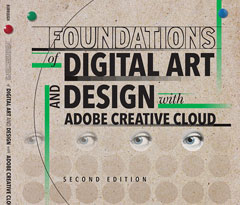
With its easy to follow instruction and witty introductions, Visual Communication on the Webmakes an excellent companion to xtine burrough’s Digital Foundations and Net Works as well as Paul Martin Lester’s Visual Communication: Images with Messages.

Includes a free one-year subscription to the Interactive e-Text version.

Digital Foundations Wiki Down

I’m teaching Digital Foundations online right now, so when the wiki went down recently I began to share work files with my students directly. There are two ways around this temporary problem: you can visit an archive of the site or you are also welcome to download the work files directly, as follows:

So sorry for the inconvenience. Hopefully we’ll be up and running again soon.

On The Web @ AEJMC, Chicago

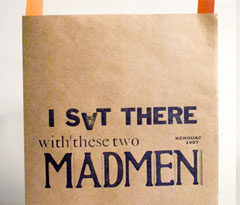
On The Web is a second place winner in the Individual Innovation category of the Best of the Web competition at the AEJMC conference this weekend in Chicago. Since I won’t be able to be there, I made this video presentation of the project for conference attendees. If you’re still learning how to use absolute and relative positioning with CSS3, I left a description of my use of those properties to keep the tape marks in place on the landing page. On The Web was created for the Browser Poems series in 2011 with the help of a commission from Terminal.

About this project: 

While reading the novel, xtine crossed out every appearance of the word, “road” in her copy of the book and replaced it with the word, “web” to investigate whether modern life and web surfing are reflected in the original road-trip manuscript. (In many cases, the work still speaks to wanderers hitchhiking on the open road or browsing the information superhighway). The visual and interactive design of the project is based on the original manuscript design style: the scroll. Each page was scanned and placed into the virtual scroll utilizing HTML5 and CSS3, enabling the user/reader to scroll through the text in a web browser. Readers can also skim the work for the word “web” to test its integration into Kerouac’s 1957 context by clicking on the last occurrence of the word on any page where it is found, or by tabbing through the scroll.